Alabama Regiment at 165th Antietam
From the Army of the Deep South
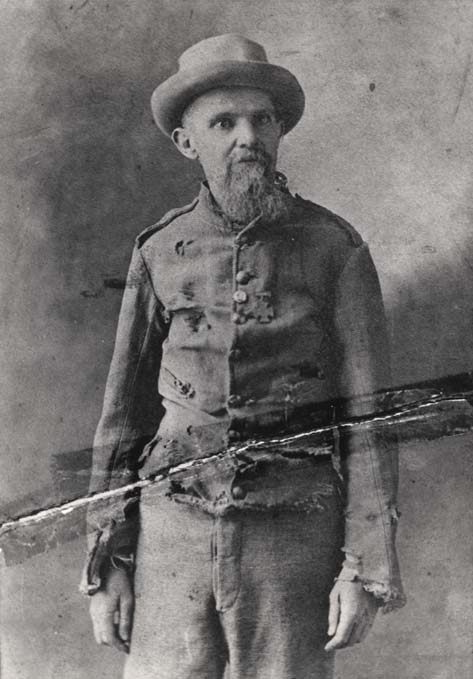
Thomas M. Murphree, 6th Alabama Infantry
Image courtesy of the Alabama Department of Archives and History, Montgomery, Alabama.
Regimental Command & Staff
Colonel
TBD
Major
TBD
Adjutant
TBD
Quartermaster
TBD
Sergeant Major
TBD
Companies & Company Contacts
Color Company
Commanding- TBD
Company A
Commanding- TBD
Company B
Commanding- TBD
Company C
Commanding- TBD
Company D
Commanding- TBD
Company E
Commanding- TBD
Company F
Commanding- TBD
Registration
Registration for the Alabama Regiment will be conducted through the regiment's dedicated registration link.
Participants should register through this page to ensure they are properly assigned to the Alabama Regiment and their selected company.
REGISTRATION LINK: Coming Soon!
Uniform
Click HERE for State of Alabama Quartermaster Uniforms, 1861 - 1865 by Fred Adolphus
Coat
Preferred — Alabama State Jacket based on Thomas M. Murphree, 6th Alabama Infantry
One surviving Alabama jacket was owned by Thomas M. Murphree, who wore it while a member of Company E, 6th Alabama Infantry. Murphree enlisted in Montgomery, May 15, 1861, and he received the jacket as part of his state clothing issue in August. He wore the jacket until February 1863, and used it at the Battle of Sharpsburg as a pillow to cradle the head of his wounded Colonel, John Brown Gordon.
The Alabama State Jacket is strongly encouraged
The jacket should feature the proper Alabama state (Murphree) trim:
- 1-inch black tape-trimmed epaulettes (Folded around outer edge)
HHV will have these wool trim items mailed to you if requested when completing registration.
Accepted — Plain Domestic Cloth Jacket
An appropriate grey or brown domestic cloth jacket without trim is acceptable.
The overall regimental appearance should reflect a believable mixture of Alabama state and Confederate clothing rather than every soldier wearing an identical jacket.
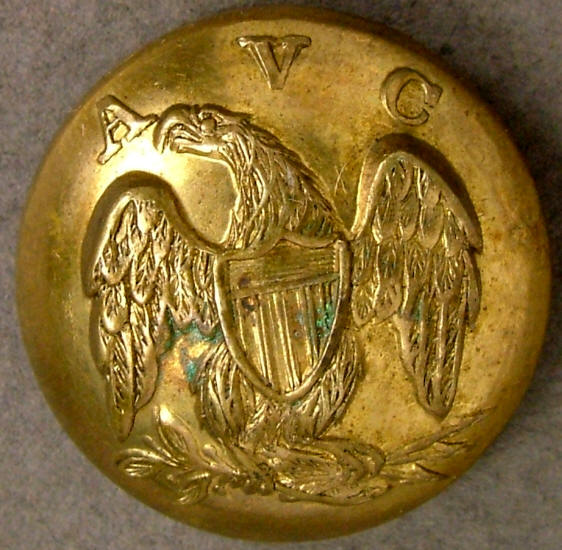 Alabama Volunteer Corps “AVC” button
No Columbus Depot Jackets!
Trousers
Preferred — Alabama State Trousers
Lined in osnaburg at the bottom of legs, to extend up eight inches, and to be sewed all round the top.
Accepted
Appropriate civilian or military-style trousers constructed from domestic cloth. Grey, brown, and other documented period shades and materials are appropriate.
Shirt
Strongly Preferred — Confederate Issue Osnaburg Shirt
The Confederate issue shirt constructed from cotton osnaburg is strongly preferred for this event.
Accepted — Federal Issue Shirt
Appropriate captured or acquired Federal issue shirts are acceptable.
Accepted — Civilian Shirt
Properly constructed civilian shirts are acceptable.
Headgear
Civilian Hat
Preferred — Appropriate Civilian Hat
Quality period civilian hats are strongly encouraged.
Hats should be properly constructed and should represent styles appropriate to the early 1860s.
Absolutely no dead animal parts or other decorations should be on your hat.
Kepi
Accepted — Confederate Kepi
An appropriately constructed kepi of domestic cloth is acceptable.
Headgear may show considerable natural wear from campaign use.
Footwear
Accepted
- Confederate military footwear
- U.S. Army footwear
- Appropriate civilian footwear
A natural mixture is appropriate.
Shoes and boots may appear in varying states of repair. Broken-in, repaired, and campaign-worn footwear is encouraged.
Equipment
LIGHT MARCHING ORDER
The Alabama Regiment will operate in light marching order when entering the immersive area.
Participants should carefully consider what a Confederate infantryman several weeks into the Maryland Campaign would realistically still be carrying.
The objective is not to demonstrate how much period equipment an individual owns.
Carry what the soldier needs.
Leave unnecessary baggage behind.
Baggage
Blanket
Accepted
- Appropriate civilian blanket
- Appropriate period coverlet
- Carpet blanket
- Federal issue blanket
Civilian blankets and coverlets must represent documented period styles and construction.
Modern quilts or items that merely appear "old fashioned" are not appropriate substitutes for documented period bedding.
Ground Cloth
Accepted — Federal Ground Cloth or painted ground cloth
Appropriate captured Federal ground cloths are acceptable.
Knapsack
Accepted
- Appropriate U.S. Army knapsack
- Appropriate Confederate knapsack
All knapsacks must represent patterns appropriate to 1862.
Participants are encouraged to avoid overpacking. Even when the knapsack itself is correct, its contents should remain consistent with the regiment's light marching order.
Haversack
Accepted
- Confederate haversack
- U.S. Army haversack
A good mixture of Confederate and Federal haversacks is desired throughout the regiment.
Confederate haversacks must be based upon original examples and appropriate to 1862.
Canteen
Accepted
- Confederate canteen
- U.S. Army smoothside canteen
A good mixture of Confederate and captured Federal canteens is desired within the ranks.
Not Accepted — Corrugated / Bullseye Federal Canteens
Accoutrements
The Alabama Regiment should display a believable mixture of Confederate and captured Federal accoutrements.
All equipment must represent patterns appropriate to September 1862.
Waist Belt
Preferred - Alabama State Belt Plate
Accepted — Appropriate Confederate Belts
Examples include:
- Roller-buckle belt
- Georgia frame-buckle belt
- Appropriate brass-plate belt
- Double-billet belt
Accepted — Appropriate U.S. Army Belt
Captured Federal equipment is acceptable and should contribute naturally to the overall mixture within the regiment.
Cartridge Box
Appropriate Confederate or Federal cartridge boxes dating to 1862 or earlier are acceptable.
The regiment should contain a natural mixture rather than every participant carrying identical accoutrements.
Cap Box
Appropriate Confederate or Federal cap boxes are acceptable.
Bayonet Scabbard
Appropriate Confederate or early-war Federal bayonet scabbards are acceptable.
Strongly discouraged — Seven-Rivet Federal Bayonet Scabbard
All scabbards must otherwise be appropriate to 1862 and compatible with the participant's weapon and bayonet.
Arms
Weapons shall be:
- Clean
- Safe
- Properly functioning
- Mechanically sound
- Maintained throughout the event
Musket / Rifle Musket
Strongly Preferred — .69-Caliber Musket
Appropriate examples include:
- M1816 conversion muskets
- M1842 Springfield muskets
Second Preference — M1861 Springfield Rifle Musket
An appropriate Model 1861 Springfield is acceptable as the second-choice arm.
Accepted — P1853 Enfield Rifle Musket
An appropriate Pattern 1853 Enfield is also acceptable.
Only officers may carry a pistol and only one per.
All arms must otherwise comply with HHV and regimental safety requirements.
Campaign Appearance
The Alabama Regiment should present the appearance of Confederate infantry well into the Maryland Campaign of 1862.
This is not intended to be a regiment of identical jackets, matching trousers, and perfectly standardized equipment.
Instead, the ranks should demonstrate a historically believable mixture of:
- Alabama state clothing
- Confederate military clothing
- Civilian clothing
- Captured Federal clothing
- Confederate equipment
- Captured Federal equipment
Participants are encouraged to use:
- Naturally faded garments
- Worn jean cloth
- Patched or repaired clothing
- Frayed cuffs and hems
- Worn trousers
- Broken-in footwear
- Weathered headgear
- Period field repairs
- Equipment showing genuine use
Artificially destroying good clothing or equipment simply to create wear is unnecessary.
Naturally worn equipment is always preferable.
Modern Items
Modern items shall not be visible within the historical area.
The following are prohibited from view:
- Modern eyeglasses
- Modern beverage or food containers
- Cell phones
- Modern tobacco products or packaging
- Modern watches
- Modern clothing
- Modern footwear
- Other obviously modern personal items
Required modern medications may be carried but must be completely concealed within appropriate period containers or otherwise hidden from view.
Grooming & Personal Appearance
Appropriate period grooming standards are required.
The following are not acceptable when visible:
- Obviously modern hairstyles
- Ponytails or other clearly modern hair arrangements
- Visible modern tattoos
- Modern jewelry
- Modern clothing or accessories
Participants with tattoos that would otherwise be visible must keep them appropriately covered throughout the historical portions of the event.
The Standard
The Alabama Regiment should immediately communicate the appearance of Confederate infantry on active campaign in September 1862.
Alabama State Jackets are strongly encouraged.
Osnaburg issue shirts should be common.
Domestic-cloth trousers should predominate.
Civilian hats and domestic-cloth kepis are appropriate.
Confederate and captured Federal equipment should be naturally intermixed.
.69-caliber muskets should predominate.
Baggage should be light.
The objective is not absolute uniformity.
It is to create a regiment whose individual variations combine into a convincing portrayal of Alabama soldiers of the Army of Northern Virginia marching and fighting through Maryland in September 1862.